





- 首页
- >
- 正文
Follow-up Djurdjevic: China U19 on track

After two matches against Australia, China’s U19 national team recorded one win and one loss—reasons for both optimism and concern. Head coach Djurdjevic commented: “The team is still in a building phase.” His words were no exaggeration. Across the two games, the team deployed two completely different lineups (4-2-3-1 in the first, 3-5-2 in the second), and for the second match, as many as 10 changes were made to the starting XI. This inevitably brought back memories of similar experiments in early February, when the team faced Uzbekistan twice in Zhaoqing.
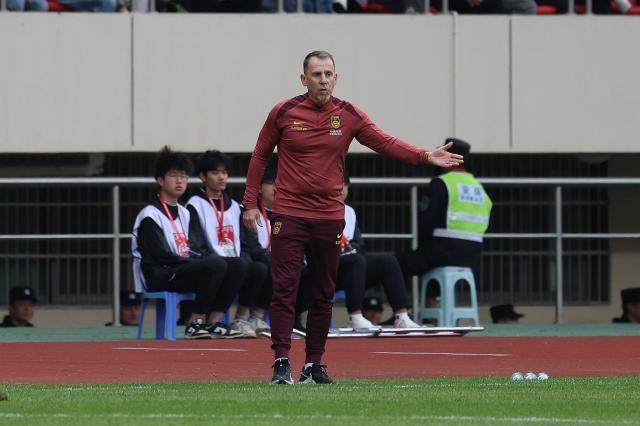
On the evening of March 31, after the match against Australia and the post-match press conference, Djurdjevic spoke again in the mixed zone, giving a joint interview to our reporter and another media outlet covering the team. He explained that the purpose of changing formations was to give every player a chance to showcase themselves. Looking ahead, before the Toulon Tournament, he plans to further evaluate all eligible players and has already drawn up a detailed scouting plan.
Q: The team used two different formations in two matches. How do you evaluate the switch to a back three in the second game? Did it meet your expectations?
Djurdjevic: It’s not easy for us to have the opportunity to play a series against a strong team like Australia, and we really value it. As everyone saw, we used two different lineups across the two matches, giving all players the chance to show their abilities—especially against a strong opponent and under such pressure. In fact, this doesn’t have much to do with the change in formation. The key factor is Australia themselves—their physical attributes are superior to ours. Moreover, the weather and pitch conditions in this match favored them more. You could see that they controlled the rhythm and overall flow of the game. But more importantly, we were able to observe our own players’ performances on the field and better summarize this series.
Q: The tactical change in the second match looked like a major experiment. Was that necessary for this new team?
Djurdjevic: Absolutely. This is a new team, and we brought in 24 players. In such intense and difficult matches, we must give them opportunities to see their level. I’m convinced this is very important for us.
Through matches like these, we have to make decisions for the future. Some players have already shown their strengths, while others need to do better—that’s a normal process. Overall, we played two very tough games against a very strong opponent. Of course, I think the pitch and weather conditions on March 31 were not favorable for us. Australia’s superior physicality and stamina were also key reasons they had the advantage.
Q: Since you took charge of the U19 team, is Australia the strongest opponent you’ve faced?
Djurdjevic: Yes, Australia has always been at this level. As you know, many of their players come from A-League first teams. They are stronger than the Uzbekistan team we previously faced. These two matches were indeed difficult, but we can draw some reasonable conclusions from them. When you win 5–0, you may not notice any problems—that’s the difference in match level. And going forward, there will be more matches like this.
Q: After this training camp, players will return to their clubs. How important is regular league play, especially for players like Yang Mingrui (No. 7) and Wei Xiangxin (No. 9), who can feature in the Chinese Super League and China League One?
Djurdjevic: It’s very important. Before preparing for this series, most of the players hadn’t played many matches this year, almost no high-level league football. But this series was of a very high standard and extremely intense. Now they will return to play in the CSL, League One, and League Two. We’ve already drawn up a plan for the coming weeks to track players across competitions nationwide, monitoring their progress over the next period.
Q: How would you assess Yang Mingrui’s performance? He scored all three of China’s goals in this series…
Djurdjevic: I don’t want to focus too much on individual players. He is part of the team. Of course, he is a very talented player, and there’s no need for me to elaborate further on that. My job is to help him improve and become better during our time together. But it’s not just Yang Mingrui—I’m doing the same with all the players. That said, scoring three goals in two matches makes him a VIP player for us.
Q: After this camp, the team will head to France in June for the Toulon Tournament. How do you view its role in team development?
Djurdjevic: It could be very difficult because we may not be able to call up all players who are involved in league matches. We will gather on May 28, depart on the 29th, and play our first match on May 31. The Toulon Tournament is an U21 competition, while we are a U19 team, so it will be very, very challenging. But it’s a great opportunity to assess our level.
Also, the schedule is quite unusual—we’ll be playing almost every two days. Normally, players don’t compete under such conditions, but we will do our best to achieve good results. More importantly, we hope to draw further conclusions, which is a necessary step in our team-building process.
Q: What is the most important factor in preparing for the Toulon Tournament?
Djurdjevic: Football is a unique sport. Whether it’s a tournament or a friendly match, there are rules and structures to follow. To compete effectively, you must be well prepared as a team. But the exact situation at that time is still unclear. After all, this is not a FIFA-organized event, so it doesn’t fully fall within the international match calendar.
At that stage, I fully understand and must respect the Chinese clubs, because many players play key roles for their teams. We will have discussions. There is no final squad yet, but we must submit a provisional list of 40 players. For now, we will see how things develop. There are still two months before the tournament begins, so we have enough time to continue scouting players across China.
热门评论
全部评论
相关阅读
权威源自专业
“体坛+”是体坛传媒集团旗下《体坛周报》及诸多体育类杂志的唯一新媒体平台。 平台汇集权威的一手体育资讯以及国内外顶尖资深体育媒体人的深度观点, 是一款移动互联网时代体育垂直领域的精品阅读应用。