





- 首页
- >
- 正文
Don't waste this golden generation!

What is the true level of China's 2009 age-group national team?
Simply put: this team is undoubtedly Asian top-tier. Moreover, they have narrowed the gap with Japan to what it was in the late 1980s and early 1990s. That means we are roughly on par with Japan. And if we fully leverage our advantages in height and physicality, we have a real chance to beat them.
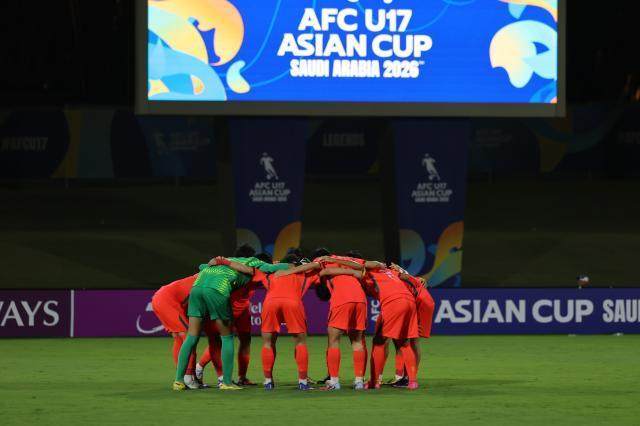
Some may recall the 1992 Asian Cup semifinal, where Japan beat China 3–2. That match was later seen as a turning point in Sino-Japanese football history, but the truth is, China had a genuine opportunity to win. Much like this U17 Asian Cup final, our loss stemmed largely from an entire first half spent obsessing over building from the back, while abandoning the effective tactics that had worked before—including the use of Zhao Songyuan.
The match is over, but a more critical and troubling question remains: we now have a generation of players that is the closest to Japan in years, yet many of them stand at a crossroads in their football careers.
Details regarding the discipline issues among these 09 players cannot be disclosed, but one thing is clear: these are not isolated cases. They are directly tied to the broader environment. As these kids grow up and transition to professional clubs, many will enter leagues like China League Two. There will be many temptations. Whether they can stay focused and dedicated to improving is highly uncertain.
In recent years, Chinese domestic players—especially attackers and spine players—have seen their playing time in the CSL increasingly squeezed by foreign imports. Young players do gain some professional experience in League Two and League One, but compared with their foreign peers, the growth of our players after age 17 is simply incomparable. In terms of club facilities and environment, playing in League Two is far from ideal.
To some extent, participating in the U17 World Cup is a major boost for these kids. The goal is there, and it forces many things to happen—they will receive more preparation support. But purely from a development perspective, their survival path and growth space within China's domestic football system are not optimistic. Going abroad to play is also not simple or easy—there are barriers, risks, and the need for opportunities and resources.
In my view, the top priority is for the CFA to pay special attention to these 2009 and 2010 generation players. If they develop smoothly between ages 17 and 20, they have every chance to become truly high-quality professionals, pillars of the future national team, and the long-awaited golden generation of Chinese football.
But that's precisely the problem. If at this age they fail to learn top-level professionalism, and their technical and tactical abilities fail to improve in sync with their foreign peers, what awaits them is likely the same old path we have seen too many times.
One practical suggestion: the CFA should first conduct a serious, systematic survey among the players themselves. What are their plans for the future? What development path do they believe suits them best?
You may remember the case of Li Junpeng. After traveling with the "Football Youngsters" to play in the Marveld Cup in the Netherlands, he immediately developed the desire to play abroad. The reason was simple: he realized that China's domestic football environment simply does not have the suffocating pressing intensity he experienced in the Netherlands. Only that kind of competitive environment can push a talented player to grow.
This is a detail worth serious attention. Because often, a player's growth is shaped by his environment. Once he experiences higher-level, faster-paced, more physical football, he will naturally rethink his future.
I believe that none of these outstanding young players want to develop bad habits or become slack. No talented 17-year-old footballer plans to waste his own potential. The problem lies in the environment, the path, and the choices available.
So what the CFA really needs to understand is this: if given the choice, what development path do these kids actually want? What kind of environment do they hope for when building the future U20 national team?
Then, the CFA should honestly ask itself: what can it provide for these kids? Can it offer more assistance? Can it truly establish a development support system at the critical ages of 17 to 20—one that aligns with the modern laws of football development?
To avoid wasting this generation, this kind of work should become the CFA's duty.
热门评论
全部评论
相关阅读
权威源自专业
“体坛+”是体坛传媒集团旗下《体坛周报》及诸多体育类杂志的唯一新媒体平台。 平台汇集权威的一手体育资讯以及国内外顶尖资深体育媒体人的深度观点, 是一款移动互联网时代体育垂直领域的精品阅读应用。