





- 首页
- >
- 正文
Chinese vote for Ballon d'or and reasoning

BALLON D'OR vote by Luo Ming, Titan Sports:
Lionel Messi, Ousmane Dembele, Rodri, Harry Kane, Kylian Mbappe, Lamine Yamal, Khvicha Kvaratskhelia, Declan Rice, Pau Cubarsi, Fabian Ruiz
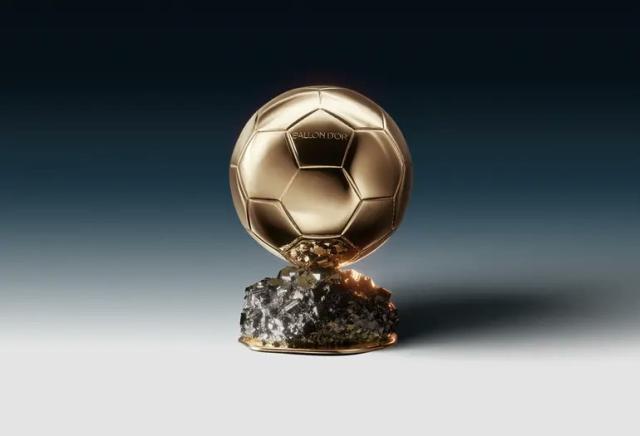
Reasoning: Voting for the Ballon d'Or is never easy in any year, but no year has made me struggle quite as much as this one. From individual performances to team honors, from club to country, there was no "perfect" Ballon d'Or winner this year. With so many contenders, the campaign for the Ballon d'Or has also been in full swing; in particular, each week's performances in the new season add new fuel to the campaign. I can only try to avoid these distractions, because the rules of France Football magazine are clear: only performances in the 2025-26 season are considered, and performances in the new season do not count.
The most important tournament last season was naturally the World Cup, followed by the Champions League, and then domestic competitions. The best players at the World Cup were naturally Messi and Rodri; the most representative players in the Champions League were Kvaratskhelia and Dembele; and across the data from all competitions, Kane and Mbappe were relatively outstanding. In the end, for the winner, I could only choose among these six. Kvaratskhelia was voted the Champions League's best player, but his shortcoming was that he did not play in this year's most important World Cup, so I could only place him behind.
So how should the remaining five be ranked? I carefully studied the voting criteria sent by France Football:
1/ The individual performances of the players and the impressive nature of their performance during the designated football season.
2/ Their club and national team achievements (honours) during the designated season.
3/ Their sense of fair play throughout the season.
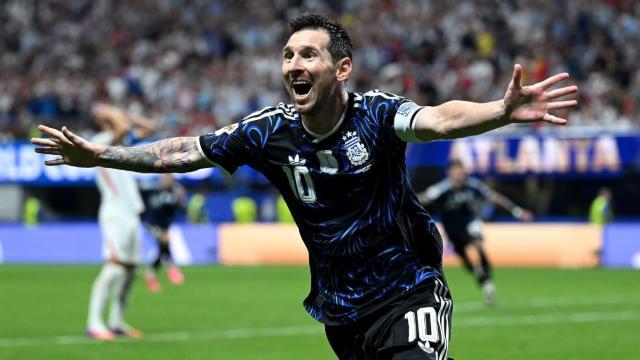
The third criterion was not very meaningful this year, while the first two can be summed up in one sentence: there must be impressive individual performances, together with important team achievements. According to this standard, I placed Messi, Dembele, and Rodri in the top three.
In terms of how "impressive" it was, Messi's performance at this year's World Cup can rank among the historic level. At the age of 39, he completed 8 goals and 4 assists; Argentina, lacking sufficient squad renewal, did not repeat the fate of other aging champions this century and reached the final again, with Messi playing a decisive role.
At club level, Messi helped Inter Miami win its first MLS title. This is not a top European competition, so I kept hesitating over whether to put him first. If the other candidates had made a few more breakthroughs, I would have made a different choice.
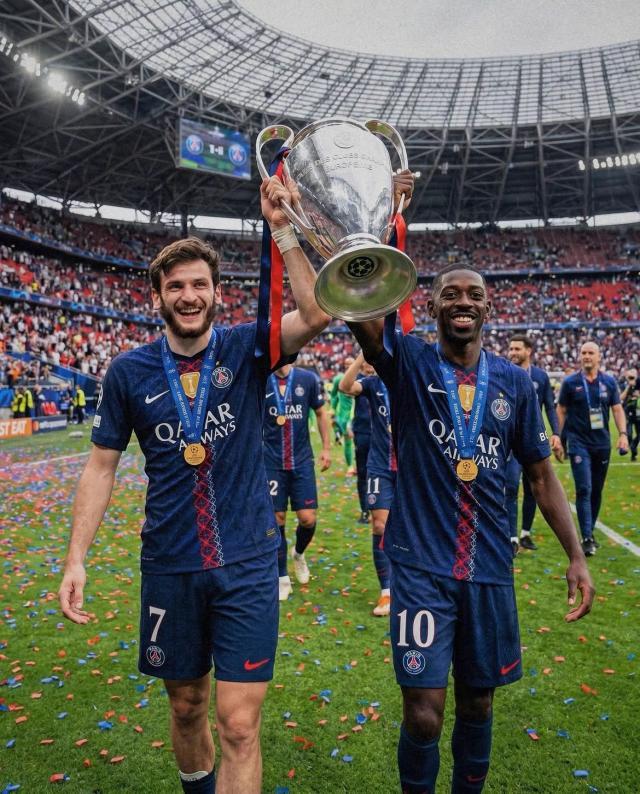
There was no perfect contender this year, and Dembele was the most balanced one: he had presentable individual performances in all competitions, while also having an important team honor (the Champions League). He did not play much in Ligue 1, but was still voted best by his peers because of his performances in key matches. In the Champions League knockout rounds, he scored a key goal against Chelsea in the first leg; he scored both goals against Liverpool in the second leg; in the semifinal against Bayern, he scored two and assisted one in a 5-4 first leg, then scored early in the second leg; and in the final he scored the equalizing penalty. Of course, as in the previous season, his role was not only about goals: his pressing up front was an important part of Paris's tactics. After the Champions League final, he was the biggest favorite for the Ballon d'Or at the time, and at the World Cup he also completed 6 goals and 2 assists. But he is always low-key, and he was "cold-shouldered" in the campaign. If he had been even better in the Champions League and been voted the Champions League's best player, I would have put him first.
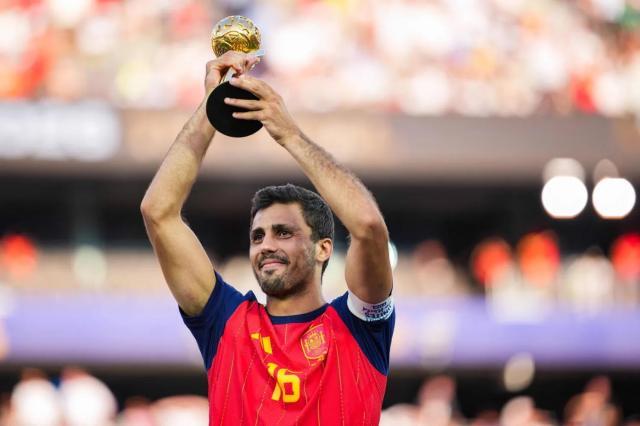
This year Spain won the most important team honor, and Rodri was Spain's best player, winning the tournament's best player award. But last season at club level he only had the League Cup and was constantly adjusting his form. If, as in 2024, Rodri had at least helped Manchester City win a Premier League title, I would have put him first.
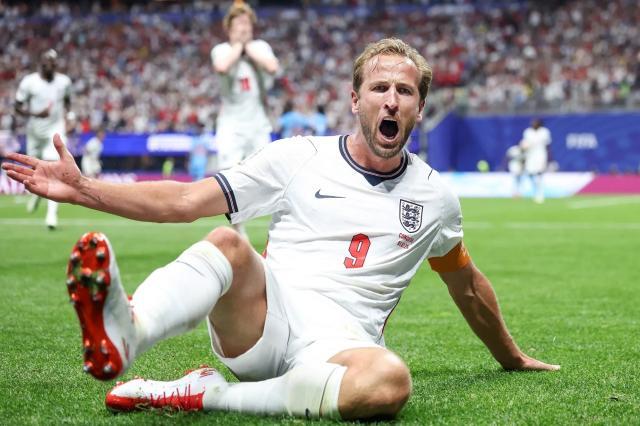
Kane produced 73 goals in 65 matches last season, won the Bundesliga and European Golden Boot with 36 goals, ranked second in the Champions League with 14 goals, and scored 6 at the World Cup. Of course, his contribution was not only goals; his dropping deep to organize was equally admirable. Kane had long been ranked first in the Ballon d'Or odds, but anyone familiar with how I have voted over the years knows that I do not look only at individual data, but also at team performance—after all, football is a team sport. Bayern won the domestic treble, but Bayern and England, as title favorites, were both stopped in the semifinals of the Champions League and World Cup. If Bayern or England had at least reached the final, I would have put Kane first.
Mbappe likewise produced very good individual data, winning the top scorer awards in La Liga, the Champions League, and the World Cup, but he did not win any trophy this year; in the Champions League he was stopped in the quarterfinals, and at the World Cup he only reached the semifinals. Therefore I placed him behind Kane.
In the late stage of the campaign, support for Yamal kept rising. This was closely related to Yamal's performances in the new season, but according to the Ballon d'Or criteria, the new season is not within the scope of evaluation. Last season Yamal was voted La Liga's best, but Barcelona were eliminated by Atletico Madrid in the Champions League quarterfinals; at the World Cup Yamal had only one goal and no assists. His ability to stretch and occupy defenders was very obvious, but he was still not as outstanding as teammates such as Rodri, and the World Cup best young player award was taken by his teammate Cubarsi.
Kvaratskhelia's fierce surges down the left in the Champions League were impressive, and he won the Champions League's best player award. Unfortunately, he did not play in the World Cup, so I could only place him behind the leading Ballon d'Or contenders.
Rice had a fruitful year. As an all-round midfield cornerstone in both attack and defense, he helped Arsenal win the Premier League title after 22 years and reach the Champions League final again after 20 years. After a tiring club season, he burned himself out at the World Cup—after he was substituted in the semifinal, England conceded two goals in a row and were overturned by Argentina.
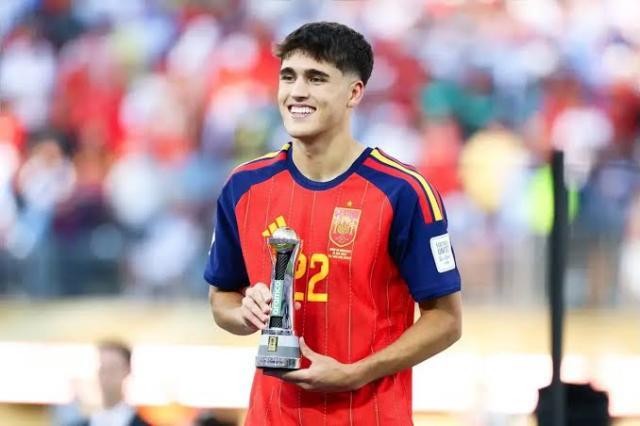
Spain conceded only one goal in eight World Cup matches. In addition to the pressing by Rodri and others in the middle and front, Cubarsi's performance in defense was also crucial. He not only ensured that Spain's high line was not broken through (he was the player with the most successful offside traps), but his high-success-rate forward passing also had important tactical value. He was therefore voted the World Cup's best young player.
The last place went to Fabian Ruiz. He swept all the honors this year and performed well in all of them, but after all, at Paris there are Vitinha and Neves, and for Spain there is Rodri. If he had shone a little more brightly, he would obviously have received a higher ranking.
热门评论
全部评论
相关阅读
权威源自专业
“体坛+”是体坛传媒集团旗下《体坛周报》及诸多体育类杂志的唯一新媒体平台。 平台汇集权威的一手体育资讯以及国内外顶尖资深体育媒体人的深度观点, 是一款移动互联网时代体育垂直领域的精品阅读应用。